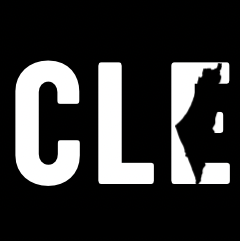
The American Dilemma Revisited: From the River to the Ocean
By TihA Antoinette CHarfauros McDaniel
TihA Antoinette is an indigenous CHamoru feminist scholar-activist from Guåhan (Guam). She is descended from Familial/Clans Capili, CHunge’ and Deru; Taotao Tamuneng, Barigåda and Hågat.
At a recent event featuring a panel of speakers addressing parallels between the history of Irish colonization, the Great Hunger, and Israel’s sadistic, ongoing genocide in Palestine, I felt called to respond during the Q&A part of the event, when a question was posed by a prominent CPAC Leader seated in the crowd. The deceptively “simple” question (which I’m certain was not posed simplistically nor seeking a simplistic response from the four panelists) was: “How do you respond to questions that advocating for Palestine is ‘un-American’?” As an Indigenous CHamoru Feminist Scholar, retired professor, and now, exclusively community-based activist, I couldn’t restrain myself from responding. Before I was conscious of what I was doing, I stepped forward and faced the crowd to respond to his sincerely posed query.
For as long as Cleveland-based Palestinian community members have passionately advocated for the end to unrestrained attacks against their people, families, and homeland in Gaza – I’ve made every attempt to stand shoulder to shoulder with them. Whether it was attending numerous City Hall gatherings in 2023, speaking out against Mayor Justin Bibb’s knee-jerk response to October 7th issuing a one sided statement that “Cleveland Stands with Israel,” to sponsoring an Art Event with OPAWL’s Cleveland Caucus to mobilize the AAPI community and create art for protests seeking a Cease-Fire in 2024, to the most recent Palestine-Irish panel on July 11th 2026 in West Park, I’ve made it a point to stand with my Palestinian brothers and sisters.
For many readers, an understandable question might be why and where does and did this deeply felt commitment and my impromptu remarks come from? Aside from what in all decency should (minimally) be the fundamentally human impulse to feel empathy for all who are wronged and moreover, to experience moral outrage for the suffering, deliberate starvation and targeted, gleeful murder of children and Elders to the obliteration of hospitals, universities, museums and more, as the descendant of a little-known genocide in my ancient homeland in the Pacific, every part of my being viscerally calls out for justice.
Far from Palestine some 350 years ago, in an archipelago of fifteen islands in the northwestern Pacific, a 30-year war reduced an original estimated Indigenous CHamoru population of 50-100,000 to 2,000-5,000. As in Gaza, mass murder and displacement were justified in the name of religion and fueled by imperial bloodlust for land and access to wealth. Jesuit Missionaries, aided by Spanish forces whose superior weaponry and deadly diseases aided the CHamoru genocide thus replaying the butchery of Indigenous peoples in Turtle Island. Given the tendency to teach history in geographic/disciplinary silos, it’s easy to dismiss what are effectively connected instances of global violence as separate and distinct.
To wit: following Columbus’ lethal arrival in the Caribbean in 1492, Magellan arrived on the shores of Guåhan where his starving crew were replenished with food and water by Indigenous CHamorus. They left the island soon after having burned down the village and killed the very people who’d saved them. Meanwhile, the Taíno people of the Caribbean also experienced mass casualties, saw several islands including Cuba and Borikua (Puerto Rico) absorbed into what Spain dubbed the “West Indies”. Yet few are aware that the islands encompassing the archipelago of Låguas yan Gåni (renamed the Marianas islands after the Austrian queen of Spain) along with the Leyte, Mindanao and some 2,000 inhabited islands (renamed the Philippines after then King Philip of Spain) were subsequently dubbed the Spanish East Indies.
As part of the CHamoru diaspora by virtue of my father’s enlistment in the U.S. Navy, it wasn’t until my junior year in college that I began to unpack the violent colonial legacy that brought my family and so many of our people to Turtle Island. Until that time, I’d neither been encouraged by a teacher or professor nor (relatedly) had it ever occurred to me to seek out this history: the history and displacement of my people from our land. My epiphany occurred during a class on the sociology of revolutions, which like effectively all U.S. curriculum in the late 1980s, focused primarily on the West. Spurred by lectures on World War II, it dawned on me that my parents were young children at the time, and that their families were likely impacted due to Japan’s role as an Axis power.
So began my quest to comprehend why my own family had settled in San Diego, home to the Kumeyaay, Luiseño, Cahuilla, and Cupeño Nations. I was soon to be stricken upon eagerly locating the first scholarly book addressing Pacific Island history in my university library. To this day, I still recall reading the singularly haunting line: “The rape of Oceania began with Guam,” in historian Douglas Oliver’s The Pacific Islands (1951). Since that moment, everything about who I was, where my family and people originated from, and what the island nations of Oceania more broadly had and continue to experience shifted irrevocably. I instantly grasped the wrenching impact of Western colonization, our collective use as pawns in successive wars and continuing global conflicts, horrific nuclear testing (in the nearby Marshall Islands), and most recently, the existential threat of what Pasifka peoples rightly identify as climate injustice to our collective existence. I raised this latter point in my impromptu remarks at the Irish-Palestine panel.
On July 6th, five days before my comments, extended on-island family, residents, and CHamorus on the smaller, more vulnerable island of Luta (Rota) in the northern part of our archipelago were hit by Supertyphoon Bavi. Bavi followed on the heels of Supertyphoon Sinaku in April, which battered the islands of Saipan and Tinian and our sister island, Chuuk to the south. In total, our island chain has experienced three Category 5/Supertyphoons, with winds exceeding 180 mph since 2023.
Elsewhere in the Pacific, low-lying islands from Tuvalu to the Solomons face rising sea levels displacing thousands of Islanders in the region. The disproportionate toll which Oceanians are facing from greenhouse gases (despite contributing little to nothing to climate change) has been met by the mobilization of Pacific Island Youth groups and the critical leadership of Pasifika women. Their unwillingness to passively accept their fate eventually led to the first of its kind ruling in July 2025 by the International Criminal Court (ICC) in the Hague. The case, led by brilliant CHamoru Jurist Julian Aguon and his law firm, Blue Ocean, produced the ICC ruling finding nations legally bound to minimize impacts contributing to climate change. While the resolution is not legally binding, it is a moral victory attesting to the resilience and advocacy of Oceanian peoples and nations.
With this in mind, let me return to the question posed by the Cleveland-based Palestinian leader at the Irish-Palestinian forum: How do you answer those who say it un-American to advocate for Palestine? As soon as the question escaped his lips, the memory of the fierce Kānaka Maoli (Native Hawaiian) Historian, Professor Haunani Kay-Trask came to mind. In a stirring speech commemorating the 100 year anniversary of what then-President Grover Cleveland observed amounted to “the illegal overthrow of Hawaii”. Trask spoke defiantly to a gathered crowd of Native Hawaiians.
With an upraised arm and clenched fist she loudly proclaimed, “I am not an American! I am not an American! I am not an American!” Trask’s searing words were clearly borne not just of past transgressions. Instead, her anger revealed moral and political outrage over the displacement of Native Hawaiians who, among other inequities, disproportionately face economic insecurity and homelessness in their native islands.
In quoting Trask and sharing my own CHamoru history, I did and do not intend to diminish the very real issues confronting Palestinian advocates who must do their advocacy in diaspora. Like them, I must also navigate any number of ambiguities and political contradictions that are not of our own creation. It is rather our extended families weathering the storms in the Pacific, Palestinian cousins, aunts and uncles living and dying in the hellscape created by the IDF and subsidized by “these” United States. So in turning the question on its head, or at the least, sideways, my response to the gaslit-infused question would be to ask the askers, “What does it mean to be American? And does that America even exist for us all?”