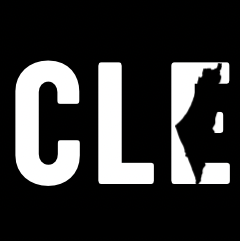
When Symbols Become Our Voice
By Alaa Muhammad
As a people who have never really had the safety or security to fully live out who we are, Palestinians have often counted on symbols.
In a world where our speech, our identity, and even being ourselves are watched and controlled, we turn to symbols to express what we are not always allowed to say. When our identities are suppressed and repressed in almost every form, sometimes symbols become the only way to truly express ourselves.
Palestinians have long been acquainted with symbols and symbolism. We have used them to tell our stories, preserve our traditions, and keep our culture alive. Just as ancient people etched their stories into stone, Palestinian women stitched ours into fabric through tatreez.
Tatreez transformed fabric into more than just clothing. It became a story of the land. Motifs were inspired by everything around us: trees, flowers, animals, stars, tents, farming tools, and everyday village life. Patterns like the cow’s eye, the rooster, the cypress tree, the moon, and the tent all carried pieces of the lives our people lived.
Each symbol and every stitch helped describe a village, its surroundings, and what the people there knew and loved. A thobe from Yaffa may carry designs inspired by its famous oranges and citrus groves, while coastal designs could reflect the sea, fish, and fishermen. The colors, fabric, stitching, and placement of the motifs could help identify where a woman came from. The meanings sometimes changed from one village or family to another, but that was also part of their beauty. Palestinians could look at a thobe and often know exactly where it came from without a single word being spoken.
When a people are repressed in nearly every form, symbols become a way not only to survive, but to continue sharing who we are.
When our family members were arrested and held without due process, sometimes for months or even years without seeing a judge or speaking to their families, Palestinians still found ways to reach them. Radio programs carried messages from families to loved ones inside Israeli prisons, especially when visits were taken away. Songs, poetry, embroidery, murals, and art became ways to send messages, carry memories, and say what could not always be said openly.
One of the most recognized Palestinian symbols is Handala, created by the late Palestinian artist Naji al-Ali.
Handala is a refugee boy who will remain forever ten years old, waiting until he can finally return home. Ten was the age Naji al-Ali was when he was forced from Palestine during the Nakba. Handala’s clothes are ripped, his feet are bare, and his hands are held behind his back. His back is turned to the world in rejection of injustice and of the so-called solutions forced upon Palestinians without ever listening to us.
Even his name carries a deeper meaning. Handala is named after a bitter, deeply rooted plant that survives harsh conditions and grows back when cut. Even our symbols carry symbols. Every part of Handala tells the story of a people who have been wounded, displaced, and betrayed, but who still refuse to disappear. He may be small and silent, but every part of him speaks.
The keffiyeh, long worn by Palestinians to protect them from the heat, sun, wind, and dust, has also become one of the greatest symbols of Palestinian identity, resistance, and solidarity around the world.
The keffiyeh itself carries its own meanings. The main fishnet pattern is commonly understood to represent the Mediterranean Sea and the livelihood of Palestinian fishermen. The bold parallel lines around its border are said to represent the ancient trade routes that crossed through Palestine, marking our land as a historic meeting place for merchants, travelers, and cultures. The leaf-like patterns represent our abundant olive trees, symbolizing resilience, patience, and our deep-rooted connection to the land.
And against popular Zionist opinion, the olive leaves represent peace.
Over the last few years, we have watched comrades be arrested, removed, or told they could not wear a keffiyeh because it was supposedly connected to hate. When, in fact, the symbols woven into it tell stories of the sea, our land, our livelihoods, resilience, and peace.
The olive tree and olive branch have always represented peace, patience, and friendship. We all know the saying “extend an olive branch,” meaning to make a friendly gesture or attempt to create peace. But for Palestinians, the olive tree is also so much more.
Olive trees have lined our cities and villages for generations. Some are older than the State of Israel itself, with roots so intertwined with the earth that they cannot be separated from the history of the people who cared for them. The olive tree gave our people everything: olives to eat, oil for cooking, lighting, and healing, leaves with traditional uses, branches for art, and harvests that supported entire families and villages. Every single part of the olive tree was important.
That is why uprooting and burning these trees is not simply destroying a tree. It is destroying someone’s livelihood, history, memory, and connection to the land. It is attacking something that meant the world to the people who cared for it, sometimes for generations.
Two other symbols found on the bodies, walls, jewelry, and artwork of Palestinians everywhere are the key and the map of Palestine.
The map represents the Palestine we knew and loved as a whole before it was separated by occupation, borders, walls, and checkpoints. It represents the Palestine our families remember, the Palestine we continue fighting for, and the Palestine we have the right to, from the river to the sea.
The key represents the homes our families were forced to leave behind. These keys were saved by the generations before us, worn around the necks of our grandmothers, and passed down from one generation to the next with a promise: one day, we will return.
They are keys to homes built by our ancestors and lived in for generations. Keys to homes where our stories began. Homes on the water whose owners died before ever being allowed to see those shores again. Homes surrounded by the plants that shaped the lives of the people living there: fig trees, olive trees, cactus pears, oranges, lemons, and so much more.
Palestine was part of what became known as the Fertile Crescent because of its rich soil and abundant land. Now Palestine is too often made synonymous with death, conflict, pain, and suffering. It truly hurts to think of it that way because Palestine has always been so much more.
For generations, Israel has used every technique imaginable to hold Palestinians back and break them down: tearing down homes, imprisoning family members, stealing land, uprooting olive groves, and surrounding our people with borders, checkpoints, restrictions, displacement, and constant fear. Even the Palestinian flag was banned in an attempt to erase Palestinian identity.
But Palestinians are resilient, steadfast, and creative.
When Palestinians were told they could not carry, paint, or display their flag, they turned to new symbols. They found things that carried the same colors and continued being brave, loud, and powerful.
The watermelon, carrying all four colors inside it, became a symbol of Palestinian identity and resistance. The Palestinian poppy, growing from our land wearing those same colors, became another reminder that even the earth carries our flag.
Every attempt to erase us has only created another way for us to be seen.
When push comes to shove, Palestinians are samdeen, steadfast. We are patient, brave, and we will always find a way to get our story out because our story is one of the ages. Our roots are intertwined with the roots of the land itself.
Where there is a will, there is a way, and we will always find a way.
Through tatreez, Handala, the keffiyeh, the olive tree, the key, the map, the watermelon, and whatever symbols may come next, we will continue to speak.
We will not be silent.
We will not be overlooked.
WE WILL RETURN.